Custom apps with AI and Azure – from sensor to cloud
In short: With AI and Microsoft Azure, a custom app, dashboard or customer portal can be up and running in days rather than months. The hard part is no longer building the app – it is getting the right data safely out of the plant and knowing what it means. Elio covers the whole chain, from the sensor to the app.
Building your own has never been easier
Cloud services such as Azure have made custom solutions far cheaper and faster to build. You need no servers of your own, sign-in is built in, and the solution can start small and grow as needed. An app showing plant status, a portal where customers see their own measurements, or a report that builds itself are no longer big IT projects.
AI makes development faster
We use AI tools in development, and it is much faster than before. A first version of an app can be ready the same day – so you can try it, give feedback and adjust along the way, instead of waiting months for a finished specification. That makes it possible to test ideas that used to be too expensive to try.
But AI does not write a good solution on its own. Someone has to know what to measure, how the plant behaves and what needs to be secured. That is where domain knowledge comes in.
Example: a smolt facility demo in one day
We recently built a demo for a recirculating aquaculture system (RAS) for smolt, using simulated operating data. It has three parts:
- Digital twin: the facility is built from drum filters, biofilters, pumps, UV, oxygenation, CO₂ stripping and tanks. The app calculates the load on each component and warns when something approaches its capacity limit.
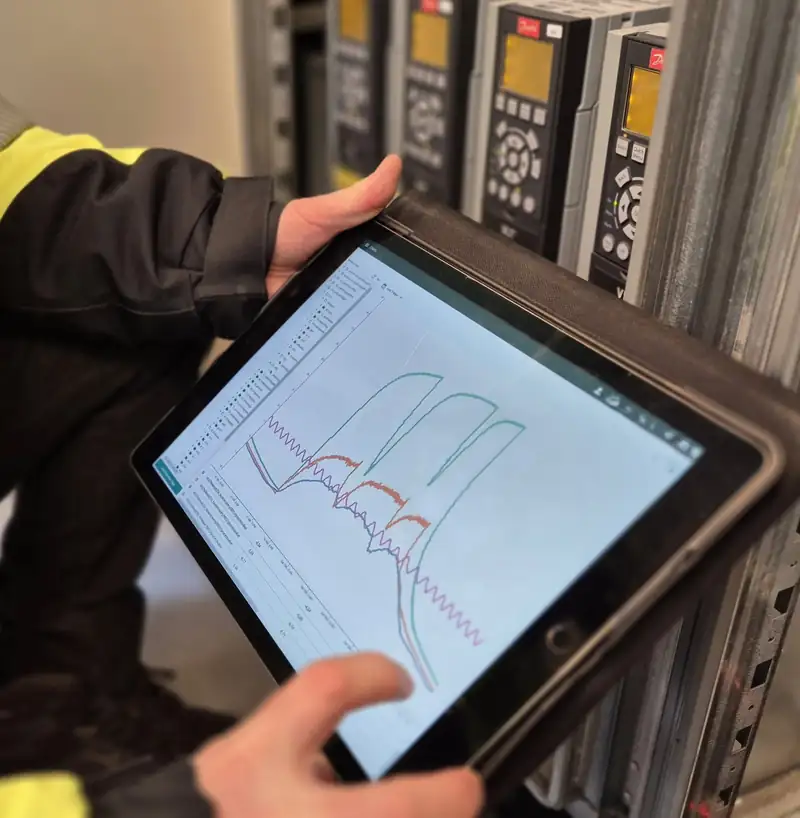
- Dashboard: oxygen, CO₂, pH, temperature, ammonium, nitrite, turbidity, biomass, feeding and mortality for each tank – with history.
- Predictive alarms with AI: the app looks at the trend over the last few hours and estimates when a value will cross its limit. AI then explains the alarm in plain language – with possible causes and actions.
The demo runs in Azure with sign-in, and was built in one day.
The app is only the tip of the iceberg
- Which data matters? A plant can have thousands of signals. The value lies in choosing the ones that say something about operation, quality and faults – and knowing what normal looks like.
- How does the data get out? From PLCs, SCADA and sensors, via protocols such as OPC UA and MQTT, often over 4G/5G from remote locations.
- How is it done safely? The operational network must not be opened to the internet. Data is sent out in a controlled way, without anyone outside being able to control the plant. Read more in Separating OT and IT networks.
- Who runs it? A cloud solution needs updates, monitoring and someone to call when something does not work.
AI on your plant data
Once the data is in the cloud, AI can help you understand it. Examples of what is possible:
- Spotting deviations early – patterns that suggest wear or faults, before the alarm goes off.
- Summaries – a short text on how operations went last week, instead of reading charts.
- Questions in plain language – "how many stops did line 2 have in October?"
- Help with troubleshooting – suggested likely causes based on alarm history and documentation.
Still, AI is no better than the data it gets. The right signals, with the right timing and context, are the foundation – which is why it pays for the people setting up data collection to understand the process too. Read more in Time series and large datasets.
OT, data and cloud in one team
Often one company knows the automation and another knows the cloud, and the project ends up in the gap between them. At Elio, it is all in one team:
- The OT side: PLCs, SCADA (Ignition and EnvisionSCADA), sensors and networks in the plant.
- Data: collection, time series and databases – and understanding what the numbers mean.
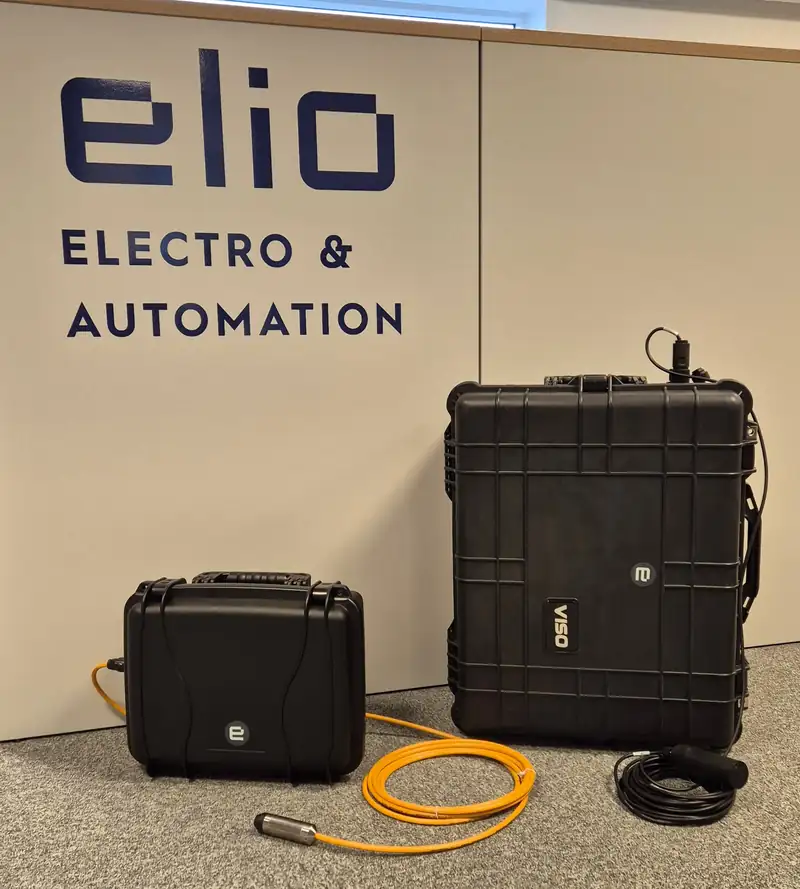
- Cloud and AI: we build and run solutions in Microsoft Azure – in your own Azure or ours – and use AI both in development and where it adds value in the solution. One example is the web portal for our mobile measurement cases.
Start small
Begin with one need and a few signals. When the solution works and is being used, build on it – step by step.
Want to see what is possible with the data from your plant? Read more about IT and networks or contact us.