
Time series – when the history gets big
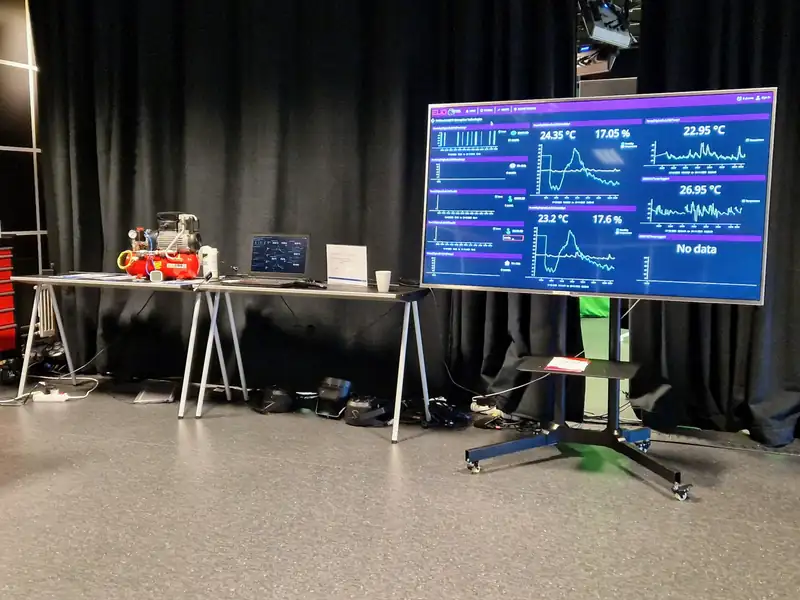
A modern plant measures all the time: temperature, pressure, flow, energy, operating status. With a few hundred signals logged every second, it quickly adds up to millions of data points a day – and billions over a few years. It is a treasure trove of information, but only if it can be stored and retrieved in a sensible way.
What is time series data?
Time series data is measurements with a timestamp: what was the value, and when. Such data has some typical characteristics. It arrives in a steady stream, it almost never changes afterwards, and it is usually queried by time period – "show the pressure for the last week" or "average energy consumption per month last year".
That sets it apart from ordinary business data, and it is why there are databases built specifically for time series.
When ordinary storage is not enough
As long as the data volume is moderate, the history in a SCADA system works perfectly well. But when the plant grows, more signals are logged more often, or the history is to be kept for many years, queries can become slow and storage expensive. Typical signs are trends that take a long time to load, and reports that never finish.
What a time series database does differently
A time series database is built to receive large volumes of measurements quickly, and to answer questions over long time periods. It can calculate averages, minimums and maximums directly in the database, so that only the answer – not all the raw data – is sent to the screen. That gives faster trends and reports, even when the history stretches over several years.
TimescaleDB in Ignition
With Ignition 2027 comes a dedicated TimescaleDB edition for Ignition, developed together with Tiger Data, and an Enterprise Historian module for large volumes of data. Inductive Automation sells and supports it itself, and it is designed for high availability. The built-in historian also gets faster queries because calculations are done in the database.
For plants where the history is an important part of operations – for documentation, analysis or requirements from the authorities – this means Ignition can grow along with the data volume.
From data to insight
Large volumes of data only have value when they are used: to find patterns before faults occur, to see where the energy goes, or to document quality over time. It is as much about what is logged and how it is structured as about which database is used.
At Elio we help with the whole chain – from which signals should be logged and how often, to the database, trends and reports in Ignition. We have long experience with SQL databases and history in Ignition.
Is your history growing faster than the system can cope with? Read more about SCADA or get in touch with us.